
Procurement leaders are navigating an undeniable shift. The era of running exploratory AI pilots to see what sticks has closed; executive teams now want to see measurable operational impact, cycle-time reductions, and clear improvements in spend coverage.
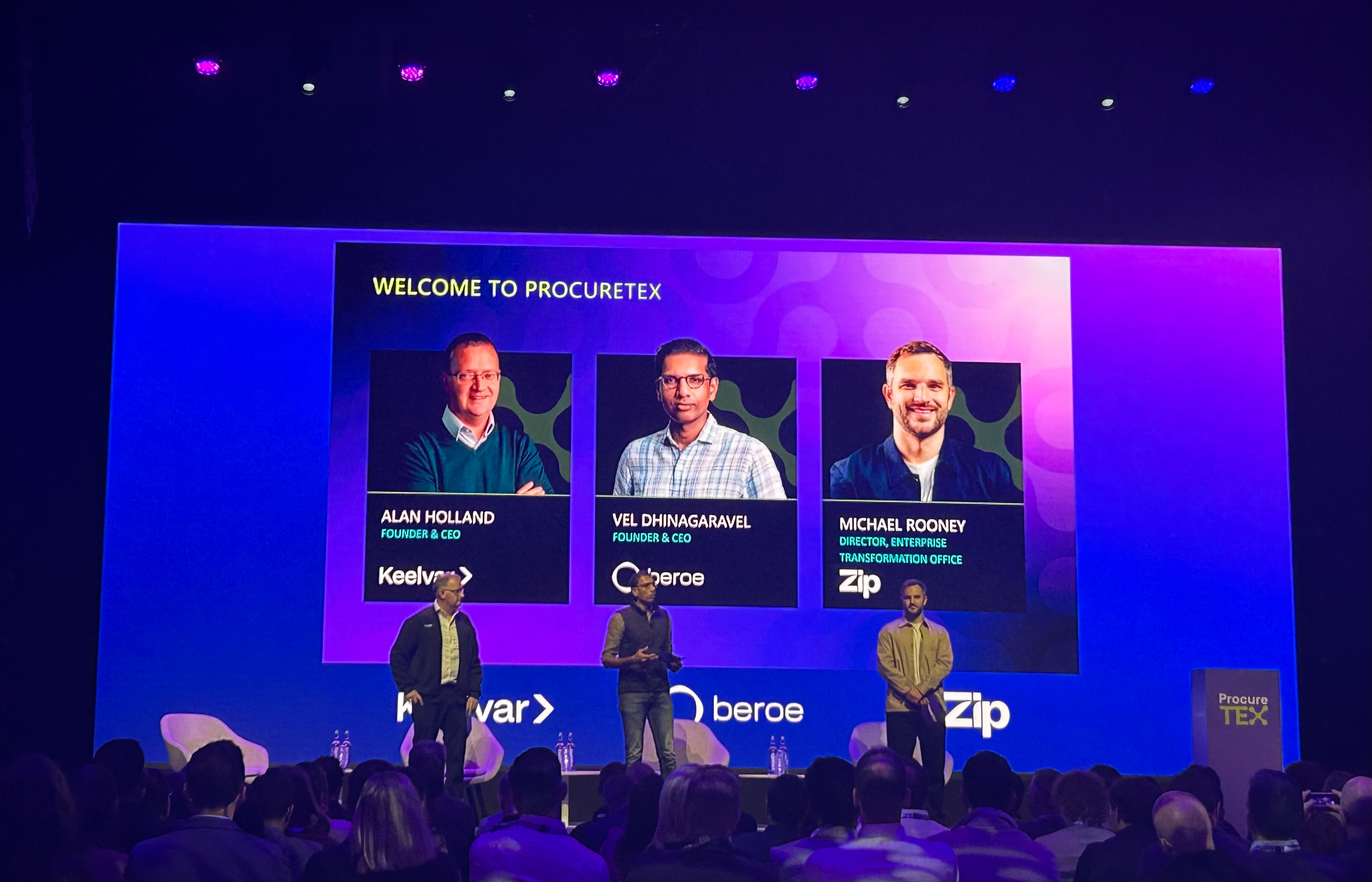
At ProcureTEX 2026 at CIRCA Amsterdam, Keelvar joined founding partners Beroe and Zip to address these realities directly. Across morning plenaries, practitioner circles, and technical workshops, the central takeaway was clear: technology is no longer the bottleneck. The real competitive divide lies in operating models, user adoption, and how effectively organizations structure work between human teams and autonomous systems.
The Macro Reality: Value Moves to the Application Layer
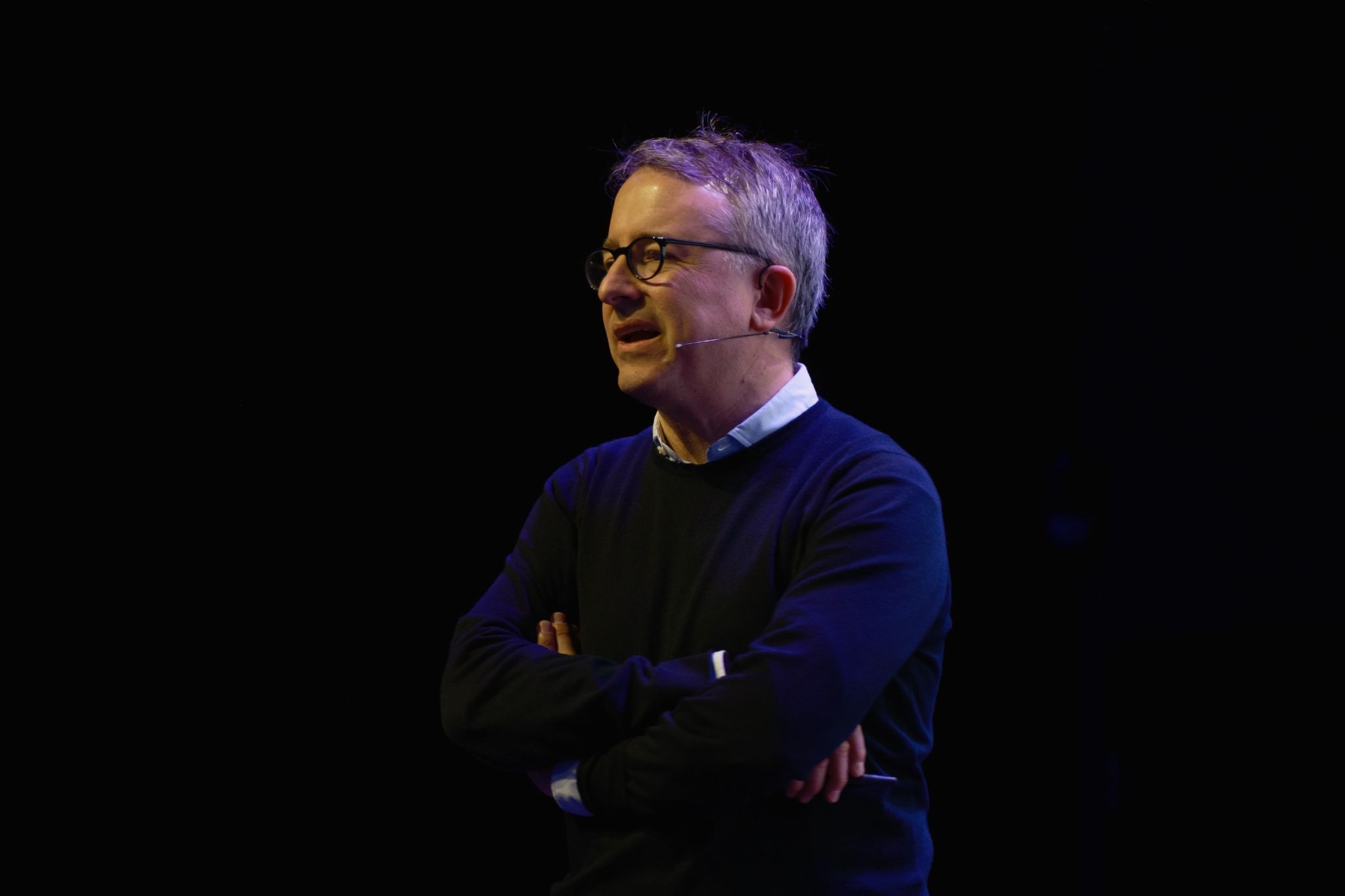
Opening the plenary, independent analyst Benedict Evans placed the generative AI cycle into the historical perspective of major technology platform shifts, from mainframes and PCs to the web and mobile.
Evans observed that big questions around emerging platforms usually come down to two answers: “no one knows” or “look at what happened last time.” With model inference costs dropping roughly 10x year-over-year, foundational models are commoditizing. As in previous platform transitions, enduring commercial value is not staying with the model labs; it is moving up the stack to the product and deployment layers where specialized workflows live.
Enterprise adoption today remains broad but shallow. Organizations may hold thousands of user licenses, yet daily active usage stays concentrated within a narrow group. As Evans noted, simply giving every employee a Copilot license does not transform an operating model.
Real productivity gains come from raising the level of abstraction. Sourcing professionals should not spend hours piecing together 45-step manual queries across disconnected sheets. Systems need to accept high-level business questions, evaluate the underlying constraints, and carry out the operational steps.
Evans also pointed out that deep automation rarely cuts overall headcount. Drawing on the classic “more accountants” pattern from the introduction of digital spreadsheets, automating routine administration changes the job rather than eliminating it—freeing professionals to tackle complex, higher-value problems that were previously unresourced.
Operationalizing AI: Building an Agentic Center of Excellence
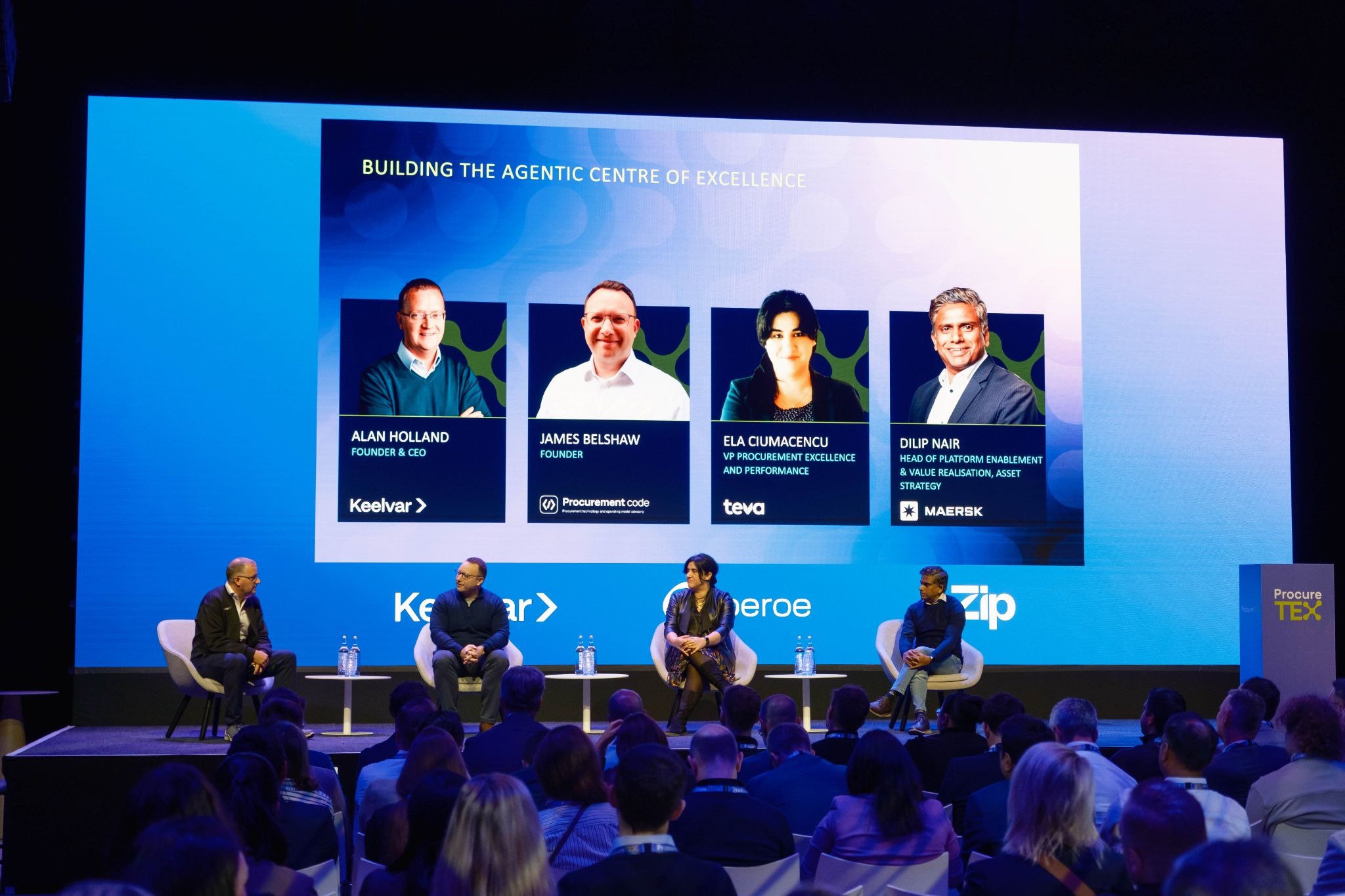
Translating those macroeconomic trends into daily procurement realities, Keelvar founder Alan Holland led an executive panel featuring Ela Ciumacencu of Teva Pharmaceuticals, Dilip Nair of Maersk, and James Belshaw from Procurement Code. The session focused on the practicalities of governing and scaling autonomous operations.
The panel emphasized that technology selection must follow a concrete problem statement rather than market trends. At Teva, deploying specialized sourcing solutions was rooted in moving spend from 20% competitive sourcing into active market engagement while establishing clean data foundations.
At Maersk, autonomous sourcing scaled from a few hundred events in 2025 to roughly 6,000 events across the first three quarters of 2026. Nair shared that 90% of platform sourcing events at Maersk now run through autonomous workflows. The core benefit was freeing category managers from months of spreadsheet data processing, allowing them to shift to dynamic, week-by-week strategy adjustments. Nair also said the most important early decision was interoperability: “Whether we build or we buy, the interoperability has to be solid.”
The panel also confronted an emerging industry friction point: supplier asymmetry. When enterprise buyers deploy autonomous agents to source at machine speed, process velocity stalls if suppliers lack the automated infrastructure to respond. Holland noted that sustainable sourcing efficiency requires a level playing field—ensuring supplier networks have the tools to automate bid responses and interact through lower-friction interfaces.
Key takeaways from the panel
- Problem First, Architecture Second: Successful AI adoption begins with clear operational goals—such as expanding competitive spend coverage or reducing cycle times—rather than deploying tools just to tick innovation boxes.
- From Annual Reviews to Real-Time Decisions: Shifting data processing to specialized agents compresses category strategy cycles from months to days, turning static annual reviews into continuous market alignment.
- Capacity Over Headcount Reduction: Autonomous agents handle volume spikes without slashing teams; organizations reinvest liberated bandwidth into strategic initiatives and supplier relationships.
- Addressing Supplier Asymmetry: Enterprise sourcing speed is bottlenecked if suppliers cannot respond at machine pace; future success depends on equipping supplier networks with agentic bidding capabilities.
- Orchestration Enables Agility: A modular stack featuring an intake orchestration layer on top of a solid data foundation allows organizations to pilot, scale, or swap point solutions with minimal business disruption.
Inside the Sessions: How Keelvar Teams Run Agentic Workflows
Beyond the main plenary, Keelvar engineers and category practitioners led targeted breakout sessions examining how autonomous sourcing operates in practice.
Orchestrating Agents for Procurement
Led by David Devlin, Jordan Smith, and Ciaran Dorney (Keelvar)
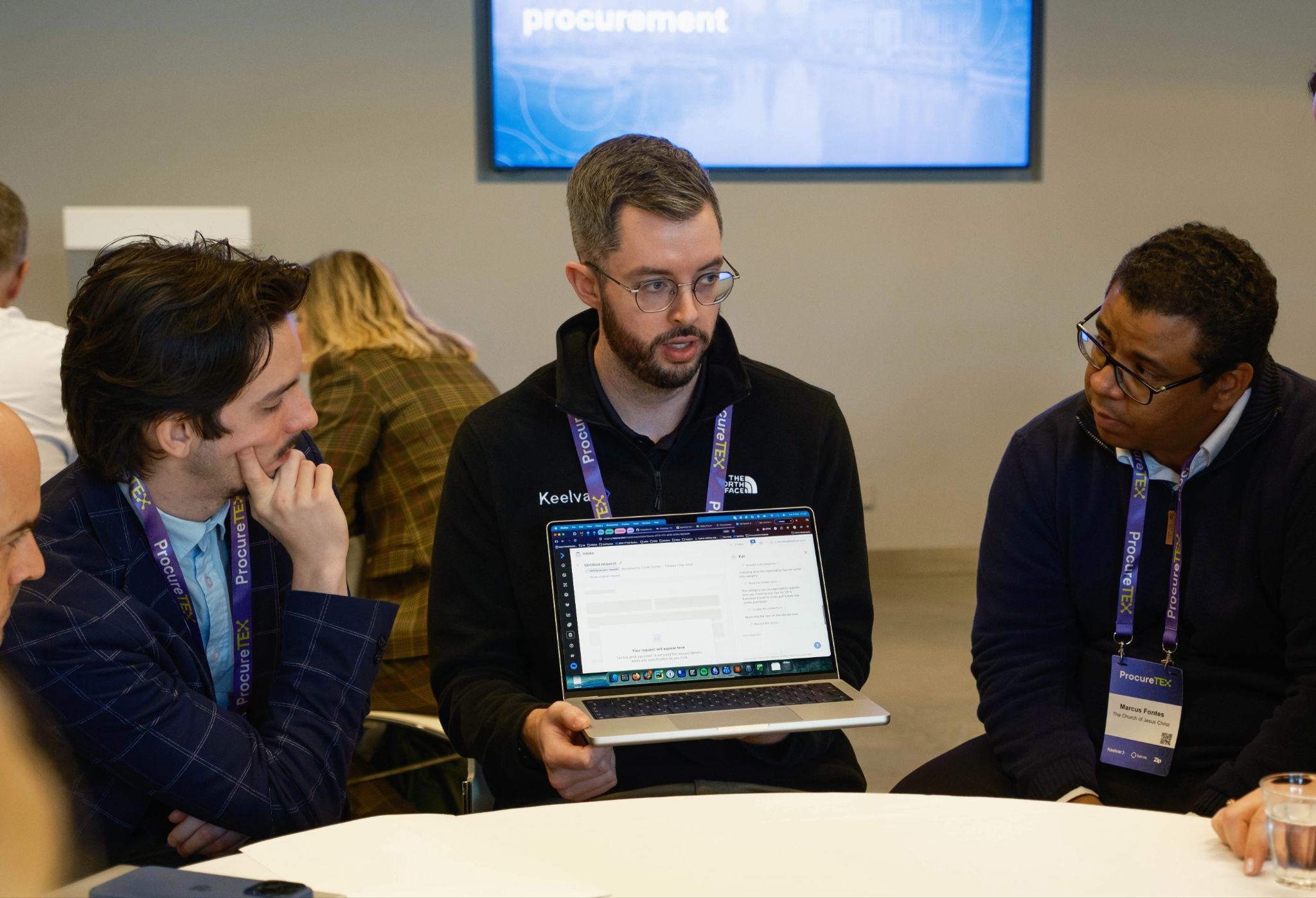
Across a two-part technical workshop, Keelvar’s engineering leaders walked attendees through the multi-agent architectures that drive enterprise sourcing workflows. The session moved past theoretical concepts to demonstrate how specialized agents interpret unstructured intake requests, validate supplier bids against category rules, and prepare scenario evaluations.
Rather than relying on basic automation scripts or unguided chatbots, the workshop highlighted the need for domain-trained systems. By anchoring agent workflows in structured procurement logic, organizations can execute multi-step events autonomously while maintaining complete audit trails and explicit human approval gates.
When Procurement Runs Itself: Zip and Keelvar’s Agentic Sourcing Stack
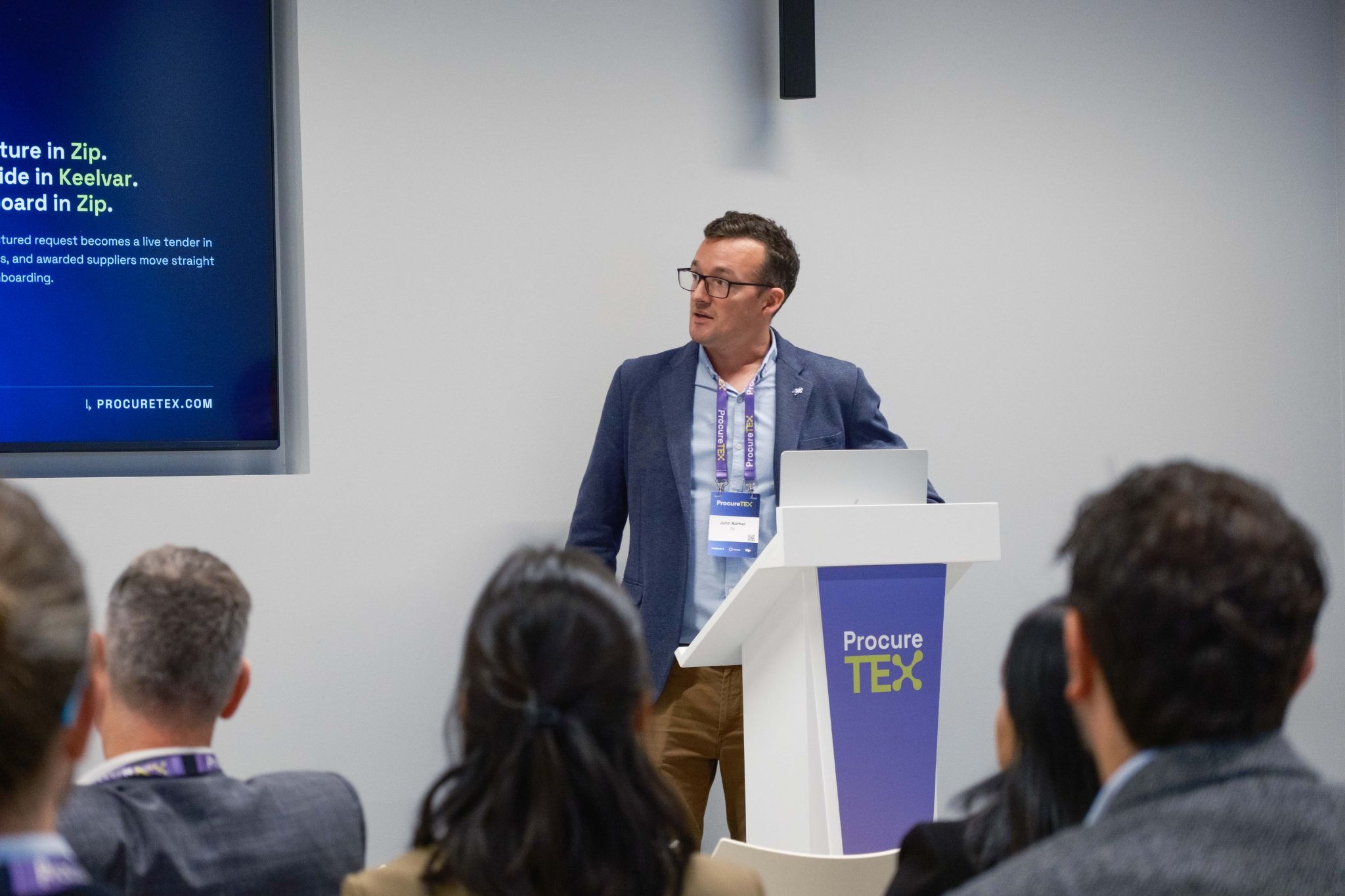
Led by Felix Koerner (Keelvar) and John Barber (Zip)
This joint session focused on how best-of-breed software architectures bridge the gap between intake and execution. Koerner and Barber walked through the mechanics of connecting Zip’s intake orchestration with Keelvar’s agentic sourcing platform.
The discussion outlined how stakeholder requests submitted through everyday intake forms are routed into compliant category workflows and launched into sourcing events without manual intervention. By passing structured data between the front-door intake layer and the sourcing engine, enterprise teams eliminate rogue spend without adding administrative hurdles for internal business users.
AI Transformation and How It Impacts the CoE
Moderated by Dylan Alperin (Keelvar), with Hardik Singhvi (Henkel) and Vincent Bremond (FrieslandCampina)
Shifting from software architecture to operating models, this practitioner circle explored the evolving role of the Sourcing Center of Excellence (CoE).
Singhvi and Bremond explained that scaling automation requires rethinking legacy governance structures. As routine spot-buys and tactical mini-tenders shift to autonomous agents, CoEs stop serving as operational gatekeepers manually processing spreadsheets. Instead, they transition into strategic enablers: designing category rules, monitoring agent performance, and reserving hands-on human expertise for complex, high-stakes commercial events.
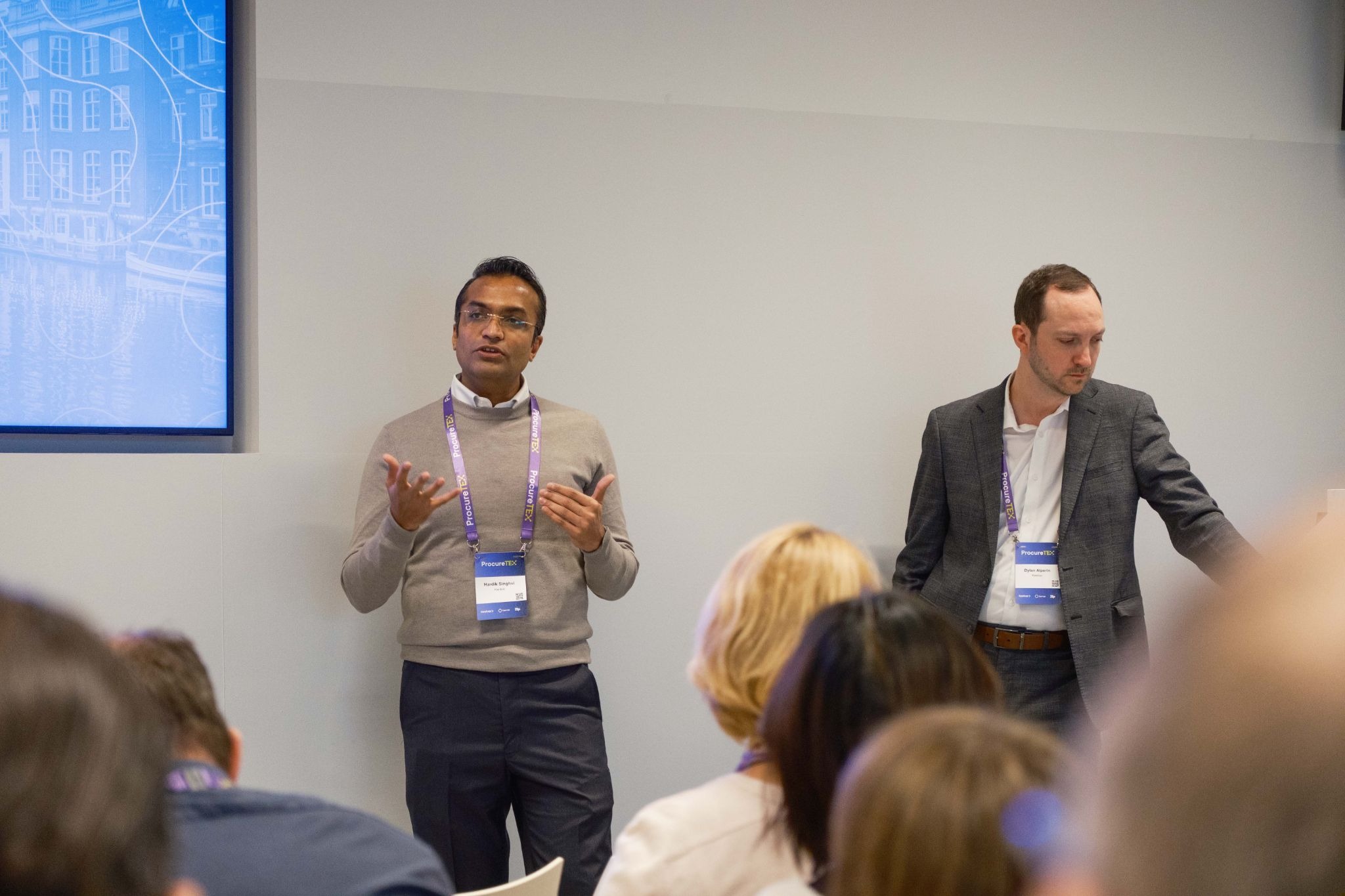
The hands-on format resonated with attendees. In our post-event survey, Practitioner Circles were the most-cited highlight of the day, followed by networking.
“The best sessions for me have been workshops where you can talk to other people, other leaders, share ideas, and really think about the future of procurement.”
— James Belshaw, Procurement Code
The Common Thread
Looking across Benedict Evans’ keynote, Alan Holland’s plenary panel, and the engineering breakouts, one clear conclusion unites the discussions at ProcureTEX 2026: technology itself is no longer the limiting factor.
Sourcing organizations that succeed over the next decade will not simply be the ones that purchase the newest tools. They will be the teams that redesign how work happens, remove bidding friction for their supplier ecosystems, and raise their level of abstraction to ask better business questions.
Interested in seeing how agentic sourcing works in practice? Connect with the Keelvar team to schedule a walkthrough of our sourcing platform and explore live agentic workflows.