.svg)


Demystifying AI in Procurement
1. The Core Idea of Agentic AI: From Passive Servant to Active Assistant
The concept of intelligent agents began decades ago. The goal was to revolutionize how we interact with computers.
- The Old Model: Software (like Microsoft Word) is a passive recipient of your instructions; everything happens because you click or select it.
- The New Model: An intelligent agent is a program that actively cooperates with you. It doesn't wait for commands but takes the initiative and works proactively on your behalf, much like a human assistant would. Modern digital assistants like Siri and Alexa are direct descendants of this early vision.
This vision led to the standard model of an agent: a system to which you communicate your preferences and goals, which then acts autonomously to achieve them.
2. The Multi-Agent Challenge: Social Skills for AI
To solve complex procurement problems (e.g., managing a portfolio of suppliers across multiple regions with dynamic constraints), a single agent is not enough. Agentic AI must form a Multi-Agent System that can:
- Cooperate (as a team)
- Coordinate (avoiding destructive interactions),
- Negotiate (to find optimal outcomes).
This collective intelligence is essential for managing end-to-end sourcing complexity.
3. The LLM Revolution: Connecting Intelligence to the World
The arrival of Large Language Models (LLMs) presented a powerful new tool but with a key limitation: they are "Disembodied Intelligence". They are chatbots with no sense of time or the ability to perform actions in the real world. Agentic AI is the solution that connects this powerful intelligence to the world:
- LLM as a ‘Brain’: It provides powerful natural language understanding and general AI capabilities like planning and problem-solving, which are essential for autonomous action.
- Agent as a ‘Body’: It perceives the need to act, uses the LLM to inform a plan and then executes actions and gets things done on your behalf.
In many domains, autonomous agents that perceive when to act, then execute a multi-step process with reasoning, and learn from past actions can deliver efficiencies and improvements in performance – very much a Holy Grail.
4. Moving Procurement from Automation to True Autonomy
Professor Wooldridge emphasizes the critical leap from high automation (speeding up processes based on human input) to true autonomy. Driven by Agentic AI, autonomy involves systems that can reason, plan, adapt, and learn across complex, multi-step workflows. This transition mandates moving towards agentic organizations where human and AI agents collaborate.
The key for procurement leaders will be to ensure that their agents are operating smartly, learning faster, and providing the necessary governance to exceed the performance standards of their competitors. This move fundamentally shifts the procurement function from a cost center focused on tactical execution to a value-driving engine focused on strategic market mastery.
Conclusion: Human + Agent is the Future
While Human + Agent is the future of business processes, we believe it is already the present for leading organizations.
Keelvar’s new AI Orchestrator, Kai, is built on this very Agentic framework, empowering procurement teams to hand over complex, multi-step sourcing processes, not just single tasks. Today, over 85% of sourcing events run on the Keelvar platform are agent-operated.
Keelvar’s AI technology empowers procurement professionals to focus on the tasks where human skills remain essential:
- Building Trust and Empathy with key strategic partners.
- Maintaining and Nurturing complex, long-term supplier relationships.
- Strategic Sourcing and adapting to major market shifts and geopolitical risk.
Agentic AI isn't about replacing people; it's about amplifying their strategic impact.
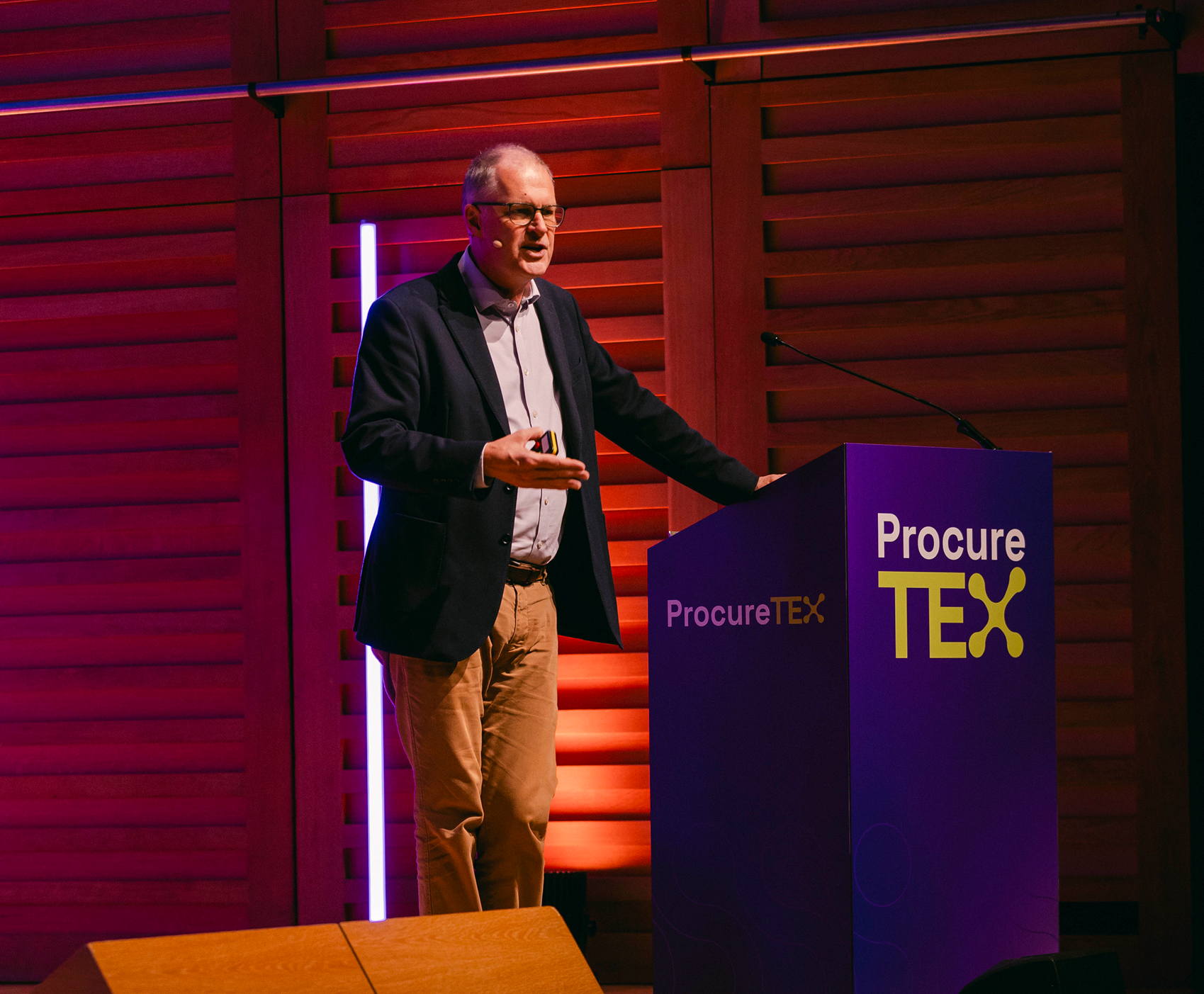
Keelvar recently hosted Professor Mike Wooldridge, a leading computer scientist at the University of Oxford, for a webinar on the reality of Agentic AI—separating the noise from what is practical, secure, and scalable. In this post, we explore the evolution of these intelligent systems, the shift from individual agents to collaborative multi-agent networks, and how this technology is transforming procurement from a manual process into a strategic powerhouse.
.png)